Sildenafil: what it is, how it works and what the label says

The short answer
Sildenafil is a prescription PDE5 inhibitor, sold as the citrate salt, that the FDA has approved for erectile dysfunction (as Viagra and generics) and for pulmonary arterial hypertension (as Revatio). It helps the body keep the chemical signal behind an erection, so it works only with sexual stimulation. It must never be combined with nitrate medicines.
Status: FDA-approved prescription medicine for ED. Source: Viagra prescribing information (Pfizer), DailyMed, checked 2026-10-17.
In short: sildenafil is a prescription medicine that blocks an enzyme called PDE5. The FDA has approved it for two conditions: erectile dysfunction, where Pfizer sells it as Viagra and other makers sell approved generics, and pulmonary arterial hypertension, where Pfizer sells it as Revatio (Viagra label; Revatio label). It does not cause an erection by itself, it does not raise desire, and it is not safe for everyone. This page is the starting point for everything The ED Report covers about sildenafil, with each answer taken from the label or another primary source.
| Question | Short answer | Where it comes from |
|---|---|---|
| What kind of drug is it? | A phosphodiesterase type 5 (PDE5) inhibitor, a small-molecule medicine | Viagra label, sections 1 and 11 |
| What is it approved for? | Erectile dysfunction (Viagra, generics); pulmonary arterial hypertension (Revatio) | Viagra and Revatio labels, section 1 |
| Does it work without arousal? | No; the label says it has no effect without sexual stimulation | Viagra label, section 12.1 |
| Is it a prescription drug? | Yes, in the US | Viagra patient information |
| Who must never take it? | Men using nitrates or “poppers”, or the lung drug riociguat | Viagra label, section 4 |
| First US approval | 1998 | Viagra label, highlights |
What is sildenafil?
Sildenafil is a prescription medicine in the phosphodiesterase type 5 (PDE5) inhibitor class, and Pfizer’s Viagra label lists its initial US approval as 1998 (Viagra label, DailyMed). The label’s patient information describes Viagra as “a prescription medicine used to treat erectile dysfunction.” MedlinePlus, the National Library of Medicine’s drug guide, places it in the class of phosphodiesterase (PDE) inhibitors and lists three US brand names: Viagra, Revatio and Liqrev (MedlinePlus, Sildenafil). Sildenafil is the shared ingredient; the brand name tells you which condition the product was approved for.
What is sildenafil citrate?
Sildenafil citrate is the form of sildenafil found in the tablets. The Viagra label describes the drug as “the citrate salt of sildenafil,” a white to off-white crystalline powder, and states each tablet’s strength as the amount of sildenafil it is equivalent to, not the weight of the salt (Viagra label, sections 3 and 11). So “sildenafil” and “sildenafil citrate” on a pharmacy label refer to the same medicine. The citrate part is chemistry, not a different drug or a different strength class.
What is sildenafil used for?
Sildenafil has two FDA-approved uses. Viagra “is indicated for the treatment of erectile dysfunction” (Viagra label, section 1), and Revatio is indicated for pulmonary arterial hypertension, high blood pressure in the arteries of the lungs, in adults and in children aged 1 to 17 (Revatio label, section 1). For pulmonary hypertension the goal is different: the Revatio label lists improving exercise ability and delaying clinical worsening.
The Viagra patient information says it is not for use in women or children. MedlinePlus notes that sildenafil is “sometimes prescribed for other uses,” which means any use outside these two approvals is a prescriber’s decision, not something the label covers (MedlinePlus, Sildenafil). Preventing Alzheimer’s disease is not one of the approved uses; our page on ED drugs and Alzheimer’s research explains what those studies can and cannot show.
| Brand or product | Approved for | Forms named on the label or by MedlinePlus |
|---|---|---|
| Viagra (Pfizer) | Erectile dysfunction in men | Blue, film-coated tablet |
| Generic sildenafil for ED | Erectile dysfunction (FDA-approved through an ANDA) | Tablet; appearance can vary by maker |
| Revatio (Pfizer) | Pulmonary arterial hypertension, adults and children | Tablet, oral suspension, injection |
| Liqrev | Pulmonary arterial hypertension in adults | Oral suspension |
Sources: Viagra label, Revatio label, Liqrev label, MedlinePlus, FDA generic drugs Q&A.
How does sildenafil work?
Sildenafil works by protecting a chemical messenger the body already makes during arousal. The label lays out the chain: sexual stimulation releases nitric oxide in the erectile tissue, nitric oxide raises a messenger called cGMP, and cGMP relaxes smooth muscle so blood can flow in; PDE5 is the enzyme that breaks cGMP down, and sildenafil blocks it (Viagra label, section 12.1). The same label notes that sildenafil has “no direct relaxant effect” on isolated erectile tissue, which is why it needs the arousal signal to act on.
PDE5 is not only found in the penis. The label lists platelets, blood vessels, the lungs and other tissues, and that wider reach is the basis for the second approval: in Revatio the same enzyme block relaxes the blood vessels of the lungs (Revatio label, section 12.1). For how sildenafil compares with tadalafil and the other pills at the level of the whole class, see how ED medications work.
What does sildenafil do, and what does it not do?
Sildenafil helps a man with erectile dysfunction get and keep an erection when he is sexually aroused, and it does nothing on its own. The patient information is direct about it: “You will not get an erection just by taking this medicine” (Viagra label, Patient Information). MedlinePlus adds that it “does not cure erectile dysfunction or increase sexual desire” and does not protect against sexually transmitted infections (MedlinePlus, Sildenafil).
Its effect also fades as the body clears it. The label gives a terminal half-life of about 4 hours for sildenafil and its active metabolite, and notes that a high-fat meal slows absorption (Viagra label, section 12.3). Our page on how long sildenafil lasts covers the timing questions in detail, and how and when to take it is set by the label and your prescriber.
How well does sildenafil work?
In the trials behind its approval, sildenafil outperformed placebo consistently. The label summarizes 21 randomized, double-blind, placebo-controlled trials of up to 6 months in more than 3,000 men aged 19 to 87, and sildenafil showed a statistically significant improvement over placebo in all 21 (Viagra label, section 14). In four fixed-dose studies of 1,797 men, between 63% and 82% of men on sildenafil reported improved erections, depending on the dose studied, compared with 24% on placebo.
Results varied with the cause of ED. In the label’s trial of men whose ED was linked to diabetes, 57% reported improved erections against 10% on placebo, and across all trials 43% of men who had had radical prostatectomy improved against 15% on placebo (same source). Those are group results from trials, not a prediction for any one man. If it has not worked for you, that is a conversation for the prescriber rather than a reason to give up on treatment.
| Group in the label’s trials | Reported improved erections on sildenafil | On placebo |
|---|---|---|
| Four fixed-dose studies (1,797 men) | 63% to 82%, rising with dose | 24% |
| ED linked to diabetes (268 men) | 57% | 10% |
| ED after radical prostatectomy (all trials) | 43% | 15% |
| ED with a psychological cause (subgroups) | 84% | 26% |
Source: Viagra label, section 14.
What forms does sildenafil come in?
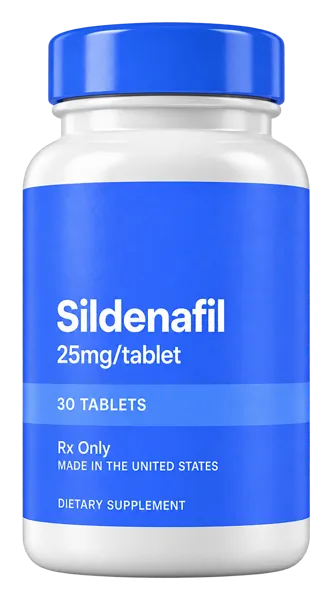
For erectile dysfunction, sildenafil comes as a tablet. Viagra is a blue, film-coated, rounded-diamond tablet (Viagra label, section 3), and approved generics may look different, because the FDA “generally allows minor differences in appearance between generic and brand drugs, such as in color” (FDA, Generic Drugs: Questions and Answers). An approved generic must have the same active ingredient, strength, dosage form and route as the brand and “must work the same way in the body” (same source).
The liquid and injectable forms belong to the lung-disease brands: Revatio comes as a tablet, an oral suspension and an injection (Revatio label, section 3), and Liqrev is an oral suspension approved for adults (Liqrev label, DailyMed). Compounded sildenafil, made by a pharmacy rather than approved as a product, is a separate category: the FDA states that “compounded drugs are not FDA-approved” and that the agency does not verify their safety, effectiveness or quality before they are marketed (FDA, Compounding and the FDA). Our explainer on whether sildenafil is the same as Viagra walks through brand, generic and compounded in full, and does sildenafil expire covers storage and shelf life.
Is sildenafil safe?
In the label’s trials, side effects were fairly common but rarely made men stop; it is still not safe for everyone. The label reports that more than 3,700 men took it in pre-marketing trials, and that in placebo-controlled studies 2.5% stopped because of side effects, not significantly different from the 2.3% who stopped on placebo (Viagra label, section 6.1). The most common side effects in the as-needed trials are listed below.
| Side effect (as-needed trials) | Sildenafil | Placebo |
|---|---|---|
| Headache | 16% | 4% |
| Flushing | 10% | 1% |
| Indigestion | 7% | 2% |
| Stuffy nose | 4% | 2% |
| Vision changes, mainly a color tinge (mild, brief) | 3% | 0% |
Source: Viagra label, Table 2. The full list, the rarer events and why side effects rise with dose are on our sildenafil side effects page.
Is sildenafil safe to take long term?
The label’s evidence on longer use comes from open-label studies of about a year. More than 550 men in the pre-marketing program took it for longer than one year, and in the long-term open-label studies few men withdrew for any reason; at the end of the long-term study, 88% said it had improved their erections (Viagra label, sections 6.1 and 14). The label does not report results beyond those trials, so it is fair to say the trial evidence covers about a year of use.
Long-term use is also where a man’s health tends to change, which matters more than the calendar. A new heart diagnosis, a new blood pressure or prostate medicine, or a prescription for an HIV drug or certain antibiotics can change whether sildenafil still fits, so any new medicine is worth flagging to the prescriber. The patient information asks men to tell their provider about all the medicines they take, including over-the-counter medicines, vitamins and herbal supplements (Viagra label, Patient Information), and NIDDK advises talking with a health care professional before using dietary supplements (NIDDK, Treatment for Erectile Dysfunction).
What are the precautions for sildenafil?
The label has a short list of men who must never take sildenafil and a longer list of situations that call for caution. It must not be taken with nitrate medicines such as nitroglycerin in any form, with “poppers,” or with riociguat, because the combination can drop blood pressure to an unsafe level (Viagra label, section 4). The full interaction picture is on our sildenafil drug interactions page.
| Precaution in the label | What it means in plain language |
|---|---|
| Heart health (5.1) | Not for men whose heart condition makes sexual activity inadvisable |
| Alpha-blockers and blood pressure medicines (5.5) | Combined, they can lower blood pressure and cause dizziness or fainting |
| Ritonavir and strong CYP3A4 inhibitors (2.4, 5.6) | Some HIV drugs, antifungals and antibiotics raise sildenafil levels sharply |
| Other PDE5 inhibitors, including Revatio (5.7) | Not to be combined; the combination has not been studied |
| Erection lasting more than 4 hours (5.2) | Needs immediate medical help to prevent lasting damage |
| Sudden vision or hearing loss (5.3, 5.4) | Stop and get medical attention promptly |
| Bleeding disorders or active stomach ulcers (5.8) | Safety is unknown in these groups |
Source: Viagra label, section 5.
On vision, the label describes NAION, a rare cause of sudden vision loss, reported in time with all PDE5 inhibitors, and says observational studies do not establish that the drugs cause it. The AUA guideline puts the absolute risk as small, about 3 additional cases per 100,000 men aged 50 or older (AUA Erectile Dysfunction guideline).
What are the downsides of sildenafil?
The main downsides are that it needs planning, it has side effects for some men, it rules out certain heart medicines, and it treats the symptom rather than the cause. It works only with arousal and wears off over hours, it can cause headache, flushing or indigestion, and it cannot be combined with nitrates, so a man who may need nitroglycerin for chest pain needs a different plan (Viagra label). It also does not fix whatever is behind the ED; the label says the evaluation of ED “should include a determination of potential underlying causes,” and NIDDK names heart and blood vessel disease, diabetes, high blood pressure and some medicines for other conditions among them (NIDDK, Treatment for Erectile Dysfunction).
A last downside is the market around it. The FDA warns that many products sold as sexual enhancement supplements or “all-natural” ED treatments are likely to be contaminated with dangerous hidden ingredients (FDA, Tainted Sexual Enhancement Products). A pill from an unknown seller is not a reliable way to get sildenafil.
When to get help right away
Get immediate medical help for an erection lasting more than 4 hours. Stop sildenafil and get prompt medical attention for sudden loss of vision in one or both eyes or a sudden drop in hearing. If chest pain, dizziness or nausea starts during sex, stop and get medical help, and tell the treating team when you last took sildenafil, because it matters for emergency heart care.
Who should talk to a clinician before taking sildenafil?
Every man should, because sildenafil is a prescription medicine and the label asks the prescriber to check the heart, the other medicines and the cause of the ED first. The Viagra patient information asks men to tell their provider about heart problems or recent heart surgery, a past stroke, low or uncontrolled high blood pressure, past severe vision loss, bleeding problems or stomach ulcers, blood cell disorders, liver or kidney problems, and a deformed penis shape (Viagra label, Patient Information). The AUA guideline recommends that men with ED be told about FDA-approved oral PDE5 inhibitors, “including discussion of benefits and risks/burdens, unless contraindicated” (AUA Erectile Dysfunction guideline).
That conversation can happen in person or through a licensed telehealth service. Either way, whether sildenafil is right for you, and how to take it, is a decision for you and the prescriber, made with your full medical history in view.
Sources
- Viagra (sildenafil citrate) tablets, prescribing information and patient information, Pfizer, DailyMed
- Revatio (sildenafil) tablets, oral suspension and injection, prescribing information, Pfizer, DailyMed
- Generic Drugs: Questions and Answers, US Food and Drug Administration
- Compounding and the FDA: Questions and Answers, US Food and Drug Administration
- Sildenafil, MedlinePlus Drug Information, US National Library of Medicine
- Treatment for Erectile Dysfunction, National Institute of Diabetes and Digestive and Kidney Diseases
- Erectile Dysfunction: AUA Guideline, American Urological Association
- Tainted Sexual Enhancement Products, US Food and Drug Administration
- Liqrev (sildenafil) oral suspension, prescribing information, DailyMed
Advertising disclosure: links marked "Paid link" go to Bodybuilding Peptides (trybbpeptides.com), an affiliate destination, and The ED Report may earn a commission if you buy there. Our coverage is independent of that relationship, and nothing on this page is medical or legal advice.
 See it at Bodybuilding Peptides