Vardenafil vs sildenafil: how the two short-acting ED pills really compare

The short answer
Vardenafil and sildenafil are both FDA-approved, short-acting PDE5 inhibitors for erectile dysfunction, and on paper they are close cousins: both are taken about an hour before sex, both peak at a median of 60 minutes, and both have half-lives of roughly 4 to 5 hours. The real differences are smaller ones: food effects, the side-effect mix, a QT caution on vardenafil's label, and how individual men respond.
Vardenafil (brand name Levitra) and sildenafil (brand name Viagra) get compared less often than sildenafil and tadalafil, mostly because they are so alike. Both are short-acting pills from the same drug class, both are taken shortly before sex, and both wear off within the same evening. That similarity is exactly why the comparison matters to men who have tried one and want to know whether the other would feel any different. This page puts the two FDA labels side by side, then looks at the trial evidence on switching. Evidence level: both are approved drugs used for their labeled purpose, each backed by large placebo-controlled trials; direct head-to-head evidence between the two is thinner and comes mostly from pooled analyses.
| Feature | Vardenafil (Levitra) | Sildenafil (Viagra) |
|---|---|---|
| Drug class | PDE5 inhibitor | PDE5 inhibitor |
| Label timing | About 60 minutes before sexual activity | About 1 hour before; label allows 30 minutes to 4 hours |
| Peak blood level (fasted) | 30 minutes to 2 hours, median 60 minutes | 30 to 120 minutes, median 60 minutes |
| Terminal half-life | About 4 to 5 hours | About 4 hours |
| High-fat meal | Label says with or without food; peak level 18% to 50% lower in food studies | Peak arrives about 60 minutes later and is 29% lower |
| Label dose range | 5 to 20 mg (usual start 10 mg), at most once a day | 25 to 100 mg (usual start 50 mg), at most once a day |
| Other forms | Orally disintegrating tablet, taken without liquid | Tablet only (as Viagra) |
| Most common side effects (label) | Headache 15%, flushing 11%, rhinitis 9%, indigestion 4% | Headache 16%, flushing 10%, indigestion 7%, nasal congestion 4%, vision 3% |
| Label-specific caution | QT prolongation: avoid with class IA or III antiarrhythmics or congenital long QT | Abnormal vision (mostly a color tinge) among common side effects, 3% |
| Never combine with | Nitrates, riociguat | Nitrates, riociguat |
Figures come from the FDA prescribing information for vardenafil tablets, vardenafil orally disintegrating tablets and Viagra. Side-effect rates are from each label’s placebo-controlled trials (vardenafil’s fixed and flexible-dose pool, sildenafil’s flexible-dose studies), so they are close but not a true head-to-head.
What is the difference between vardenafil and sildenafil?
The honest answer is that the difference is small: they share a mechanism, a timing window and most of a side-effect profile, and they differ mainly in details of food effect, safety cautions and how individual men respond. Both labels describe the drug as a selective inhibitor of the enzyme PDE5, and both say sexual stimulation is still required for an erection (vardenafil label, DailyMed; Viagra label, DailyMed). On the labels, vardenafil works at much smaller milligram amounts (5 to 20 mg against 25 to 100 mg), which reflects potency rather than strength of effect. Vardenafil also comes as an orally disintegrating tablet that melts on the tongue; its label says that version “should be taken without liquid” and is not interchangeable with the 10 mg film-coated tablet (vardenafil ODT label, DailyMed).
How does sildenafil work?
Sildenafil works by blocking PDE5, the enzyme that breaks down cGMP, the chemical messenger that relaxes blood vessels in the penis during arousal. When arousal releases nitric oxide, cGMP levels rise and blood flows in; with PDE5 blocked, cGMP lasts longer and the erection response is stronger (Viagra label, DailyMed). Vardenafil does the same thing through the same enzyme, which is why the two behave so similarly (vardenafil label, DailyMed). Neither drug creates desire or arousal on its own; our explainer on how ED medications work walks through the biology in more detail.
What does sildenafil do?
Sildenafil improves the ability to get and keep an erection during sexual stimulation in men with erectile dysfunction; it does not raise libido and does not produce an erection without arousal. The Viagra label notes that in the lab sildenafil is about 10 times more selective for PDE5 than for PDE6, a related enzyme in the retina, and ties the temporary blue-tinged or blurred vision some men notice to that PDE6 effect (Viagra label, DailyMed). The vardenafil label reports more than 15-fold selectivity over PDE6 in its own lab testing (vardenafil label, DailyMed). Those are separate lab measurements, so they hint at a difference rather than prove one. For the timing of a single dose, see how long sildenafil lasts.
Which works faster, and which lasts longer?
On the labels they are nearly identical: both reach peak blood levels at a median of 60 minutes, and both clear with a half-life of roughly 4 to 5 hours. Vardenafil’s label gives a peak window of 30 minutes to 2 hours and a terminal half-life of “approximately 4-5 hours” for the drug and its main metabolite (vardenafil label, DailyMed). Sildenafil’s label gives 30 to 120 minutes and a half-life of “about 4 hours” (Viagra label, DailyMed). A 2015 review of the class reported the shortest onset for vardenafil, at 10 minutes, with a usual duration of 5 to 7 hours, against about 30 minutes and 4 to 6 hours for sildenafil, while still advising both be taken 30 to 60 minutes ahead (Evans and Hill, Patient Preference and Adherence, 2015). If a longer window is the real goal, neither of these is the answer; that is tadalafil’s territory, covered in tadalafil vs sildenafil and daily vs on-demand tadalafil.
Does food change how vardenafil or sildenafil works?
A heavy, fatty meal blunts both drugs to some degree, but sildenafil’s label describes the clearer delay. With a high-fat meal, sildenafil’s peak arrives about 60 minutes later on average and is 29% lower (Viagra label, DailyMed). Vardenafil’s label says it “can be taken with or without food,” yet its own food studies found high-fat meals cut peak levels by 18% to 50% (vardenafil label, DailyMed). For the dissolving tablet, a high-fat meal did not change total exposure or time to peak, though peak level fell 35%, and swallowing it with water reduced total exposure by 29% (vardenafil ODT label, DailyMed). In plain terms, neither pill is food-proof the way tadalafil is.
How do the side effects compare?
The common side effects are the same family for both, because they come from blood-vessel widening: headache, flushing, a stuffy or runny nose and indigestion. In vardenafil’s placebo-controlled trials, headache was reported by 15% (placebo 4%), flushing 11%, rhinitis 9% and dyspepsia 4%, with a dose effect across 5, 10 and 20 mg (vardenafil label, DailyMed). In sildenafil’s flexible-dose trials, headache was 16%, flushing 10%, dyspepsia 7%, nasal congestion 4% and abnormal vision 3% (Viagra label, DailyMed). The review by Evans and Hill notes visual disturbances are reported more with sildenafil than with the other drugs in the class (PMC). Vardenafil carries its own distinct caution: its label says men with congenital QT prolongation, or who take class IA or class III antiarrhythmics such as quinidine, amiodarone or sotalol, should avoid it (vardenafil label, DailyMed). Our ED medication side effects guide covers the class as a whole.
The rules both labels share
Neither vardenafil nor sildenafil can be taken with nitrate heart medicines such as nitroglycerin, or with the pulmonary-hypertension drug riociguat, because the combination can drop blood pressure dangerously. Both labels also tell men to stop and seek care for sudden vision or hearing loss, and to get emergency help for an erection lasting more than 4 hours.
Interactions with other medicines are where the labels diverge most sharply. Ritonavir, an HIV drug that blocks the liver enzyme CYP3A4, raised vardenafil exposure 49-fold in a label study and stretched its half-life to 26 hours, compared with an 11-fold rise for sildenafil, and both labels set strict limits for men on it (vardenafil label, DailyMed; Viagra label, DailyMed). Both also advise caution with alpha-blockers, which are common for blood pressure and prostate symptoms. A full medication list matters more here than the choice of pill.
Which one works better?
In one large pooled comparison, sildenafil ranked ahead of vardenafil on efficacy at standard starting doses, and vardenafil did not show a tolerability advantage to make up for it. A 2015 network meta-analysis of 82 trials (47,626 men) found sildenafil 50 mg had the greatest efficacy among starting doses but also the highest overall rate of side effects, while vardenafil 10 mg had similar side-effect rates with “markedly lower global efficacy” (Chen et al., European Urology, 2015). Network meta-analyses lean heavily on indirect comparisons, so this is a ranking, not a verdict for any one man. On its own label, vardenafil clearly beat placebo: in the North American fixed-dose trial, the rate of erections sufficient for penetration was 65%, 75% and 80% at 5, 10 and 20 mg, against 52% on placebo (vardenafil label, DailyMed).
Why do men switch from sildenafil to vardenafil?
The reasons to consider a switch are practical ones: side effects a man dislikes, a pill that did not work well enough, or a preference such as a tablet that dissolves on the tongue. The best-known evidence on switching is the PROVEN trial, which gave vardenafil or placebo to 463 men whose sildenafil had not worked for them. Vardenafil lifted per-patient success rates for penetration from 30.3% to 62.3% and for completed intercourse from 10.5% to 46.1%, and 30% of men on vardenafil reached normal erectile function scores, against 6% on placebo (Carson et al., BJU International, 2004). Note the limit: “nonresponse” was based on the men’s own history, not on a supervised retest of sildenafil. A Mayo Clinic study of 327 men whose sildenafil (100 mg) had failed, all evaluated with injection testing and Doppler ultrasound, found a far smaller rescue rate: of the 59 who then tried vardenafil at home, only 7 (12%) reported successful intercourse, and the authors found most of the sildenafil nonresponders had severe arterial insufficiency (Brisson et al., Urology, 2006). So switching can help some men, but when a pill truly fails, the cause usually deserves a look first.
What do real-world use patterns show?
In the published use data, sildenafil is the common default and vardenafil the outlier. In a 6-month Brazilian observational study summarized by Evans and Hill, sildenafil was the most common first choice and vardenafil the least common, and adherence to either short-acting drug sat between 60% and 70%, against 75% for tadalafil; with only 104 men enrolled, those differences were not statistically significant (PMC). In another study in the same review, men using vardenafil or sildenafil described similar effectiveness, with at least 90% reporting their longest successful window as about 12 hours or less. Tadalafil, by contrast, had 90% of men reporting a window of 48 hours or less, which the authors suggest may help explain its higher satisfaction. The practical takeaway: a man who wants more time than sildenafil gives will not find much of it in vardenafil.
How do the costs compare?
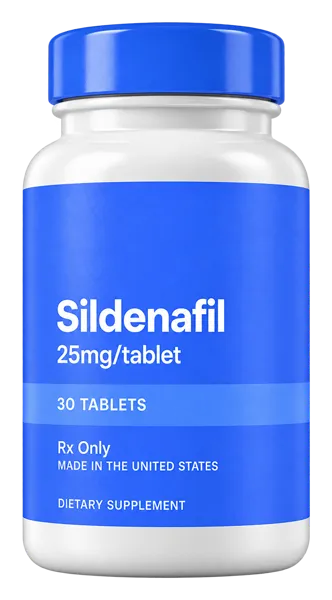
Both drugs are sold as generics as well as under their brand names. Generic vardenafil tablets and dissolving tablets both have their own FDA labels on DailyMed (vardenafil label, DailyMed; vardenafil ODT label, DailyMed). Actual cost depends on strength, quantity, pharmacy and any discount program, so it is worth comparing current prices for the exact strength prescribed. For one reference point, Bodybuilding Peptides listed its sildenafil 25 mg oral tablet at $120 for a one-month plan when we checked its site on 2026-10-12. Our breakdown of what online ED treatment costs explains how consultation fees and pharmacy pricing add up.
Which one is right for you?
For most men the two are close enough that the deciding factors are personal: how a first drug was tolerated, food habits, other medicines, and heart rhythm history. The American Urological Association says men should be told about oral PDE5 inhibitors unless they are contraindicated, that the choice of treatment should be made through shared decision-making with a clinician, and that ED is a risk marker for cardiovascular disease and other conditions worth checking (AUA Erectile Dysfunction Guideline). A man on antiarrhythmics or with a long-QT history has a clear reason to steer away from vardenafil; a man who disliked sildenafil’s vision effects has a reason to ask about it, since visual disturbances are reported more often with sildenafil than with the rest of the class. Neither pill fixes the underlying cause of ED, and a licensed clinician can assess whether either one is appropriate. For more on what is behind the problem, see ED and your health and whether sildenafil is the same as Viagra.
Status: Sildenafil: Active ingredient is FDA-approved; compounded versions are not FDA-approved. What these status terms mean.
Sources (8)
Advertising disclosure: links marked "Paid link" go to Bodybuilding Peptides (trybbpeptides.com), an affiliate destination, and The ED Report may earn a commission if you buy there. Our coverage is independent of that relationship, and nothing on this page is medical or legal advice.
 See it at Bodybuilding Peptides