Tadalafil vs sildenafil: which ED medication fits your situation?

The short answer
Tadalafil and sildenafil are both FDA-approved generic PDE5-inhibitor pills for erectile dysfunction, and the main difference is timing: sildenafil works in about an hour and lasts a few hours, while tadalafil can improve erectile function for up to 36 hours and also comes as a low daily dose. Sildenafil is more affected by a heavy meal; tadalafil can be taken with or without food. Their side-effect profiles are similar, and both carry the same critical safety rule: neither can be combined with nitrate heart medicines. Neither one cures ED, and which fits you is a decision a licensed clinician makes with you after looking at why the ED is happening. A prescription is never promised in advance.
Tadalafil and sildenafil are the two most widely used prescription pills for erectile dysfunction (ED). Both are FDA-approved, both are now sold as inexpensive generics of their original brands (tadalafil as generic Cialis, sildenafil as generic Viagra), and both belong to the same drug class, so the decision between them rarely comes down to one being stronger. It usually comes down to timing, food, side effects, and how you prefer to use the medication. This page lays the two side by side using the FDA labels and published pharmacology, then explains how a licensed clinician matches one to an individual. Neither medication cures the underlying problem: ED is managed rather than cured, and it is frequently a signal worth investigating in its own right.
| Feature | Sildenafil (generic Viagra) | Tadalafil (generic Cialis) |
|---|---|---|
| Drug class | PDE5 inhibitor | PDE5 inhibitor |
| FDA-approved for | Erectile dysfunction | Erectile dysfunction; also benign prostatic hyperplasia (BPH) |
| Typical onset | About 30 to 60 minutes | About 30 minutes to 2 hours |
| How long it works | A few hours (half-life about 4 hours) | Up to 36 hours (half-life about 17.5 hours) |
| Dosing styles | On demand only, 25–100 mg (usual start 50 mg) | On demand 5–20 mg (usual start 10 mg), or daily 2.5–5 mg |
| Take with food? | A high-fat meal slows it down | With or without food |
| Common side effects | Headache, flushing, indigestion, stuffy nose, vision changes | Headache, back pain and muscle aches, indigestion, flushing, stuffy nose |
| Max frequency | Once per day | On demand, or once daily at the low dose |
| Generic cost | Low | Low (daily use means more tablets per month) |
| Never combine with | Nitrates, riociguat | Nitrates, riociguat |
The figures above are drawn from the FDA prescribing information for sildenafil and tadalafil, plus a published pharmacology review of the drug class. The sections below explain what each row means in practice.
What is the main difference between tadalafil and sildenafil?
The core difference is how long each one lasts: sildenafil works for a few hours, while tadalafil can keep working for up to a day and a half. Both are phosphodiesterase type 5 (PDE5) inhibitors, which means they work through the same pathway. During sexual arousal the body releases nitric oxide, which raises a signaling molecule called cGMP that relaxes the blood vessels in the penis and lets blood flow in; PDE5 is the enzyme that breaks cGMP down, and these drugs block it so the effect lasts longer. Sildenafil is described on its label as a “selective inhibitor of cyclic guanosine monophosphate (cGMP)-specific phosphodiesterase type 5 (PDE5)” (Viagra prescribing information, DailyMed), and tadalafil is a PDE5 inhibitor that works the same way (Cialis prescribing information, DailyMed). Neither one creates arousal on its own; both need sexual stimulation to work, and for a fuller walk-through of that biology see our explainer on how ED medications work. Sildenafil and tadalafil are two of the four PDE5 inhibitors approved in the United States, alongside vardenafil and avanafil (comparison of PDE5 inhibitors, PMC). One extra distinction: tadalafil is also FDA-approved for the urinary symptoms of an enlarged prostate (BPH), which can matter for men who have both conditions (Cialis prescribing information, DailyMed).
How fast does each one work, and how long does it last?
Sildenafil typically takes effect in about 30 to 60 minutes and lasts a few hours, while tadalafil starts in roughly 30 minutes to 2 hours but can improve erectile function for up to 36 hours. Sildenafil’s label recommends taking it “approximately 1 hour before sexual activity,” notes it can be taken “anywhere from 30 minutes to 4 hours before,” and reports a terminal half-life of about 4 hours, with peak blood levels at a median of 60 minutes (Viagra prescribing information, DailyMed). Tadalafil is the outlier of the class: its label states it “improves erectile function compared to placebo up to 36 hours post dose” (Cialis prescribing information, DailyMed), because its terminal half-life is about 17.5 hours, far longer than the roughly 4 hours of sildenafil (tadalafil pharmacology, StatPearls). That long window is why tadalafil is sometimes nicknamed the “weekend pill.” In practice, sildenafil suits a planned, single occasion, while tadalafil covers a longer stretch without watching the clock. For a closer look at sildenafil’s timing on its own, see how long sildenafil lasts.
Should you use daily tadalafil or take a pill on demand?
Both drugs can be taken on demand before sex, but only tadalafil also comes in a low daily dose that keeps a steady level in your system so you do not have to plan around a pill at all. Sildenafil is taken as needed, with a “maximum recommended dosing frequency” of once per day (Viagra prescribing information, DailyMed). Tadalafil offers a choice: an as-needed dose that starts at 10 mg and can move to 20 mg or down to 5 mg, or a once-daily dose that starts at 2.5 mg and may increase to 5 mg, taken “without regard to timing of sexual activity” (Cialis prescribing information, DailyMed). The trade-off is spontaneity versus routine. Daily low-dose tadalafil lets sex happen whenever it happens, which some couples strongly prefer; on-demand dosing means taking a tablet only when you expect to need it, which can mean fewer pills for men who have sex less often. Daily tadalafil also eases enlarged-prostate symptoms at the same time, an advantage for men who have both. For a closer look at choosing between the two schedules, see our guide to daily versus on-demand tadalafil dosing.
Does food change how tadalafil or sildenafil works?
Food matters more for sildenafil: a high-fat meal slows its absorption and can delay how quickly it works, while tadalafil can be taken with or without food. The sildenafil label reports that “when VIAGRA is taken with a high fat meal, the rate of absorption is reduced, with a mean delay in Tmax of 60 minutes and a mean reduction in Cmax of 29%” (Viagra prescribing information, DailyMed). In plain terms, a big fatty dinner can push sildenafil’s onset back and blunt its peak. Tadalafil “may be taken without regard to food,” and its absorption is not meaningfully changed by a meal (Cialis prescribing information, DailyMed); this food independence is one of tadalafil’s practical advantages. If you like a large meal with a date, that alone can tilt the choice toward tadalafil.
How do the side effects compare?
The two share the same short list of common side effects, most of them mild and tied to blood-vessel widening: headache, flushing, indigestion, and a stuffy nose. On the sildenafil label the most common reactions in flexible-dose trials were headache (16%), flushing (10%), indigestion (7%), nasal congestion (4%), and abnormal vision such as a bluish tinge or light sensitivity (3%) (Viagra prescribing information, DailyMed). Tadalafil’s most common reactions, at 2% or higher, are “headache, dyspepsia, back pain, myalgia, nasal congestion, flushing, and pain in limb” (Cialis prescribing information, DailyMed). The one notable pattern is that tadalafil is more associated with back pain and muscle aches, usually appearing a day or two after a dose and easing on their own, while the transient vision changes are reported a little more with sildenafil. For most men these effects are minor, but they are a real reason a clinician may switch someone from one drug to the other.
Who should not take either one, and what is the nitrate rule?
Neither pill is safe for anyone taking nitrates, and both require a clinician to review your heart health and other medicines before you start. This is the single most important safety point about ED medication, so it is worth stating plainly.
The nitrate rule: never combine these with nitrates
Sildenafil and tadalafil, like all PDE5 inhibitors, must not be taken with nitrate heart medicines such as nitroglycerin or isosorbide, or with the pulmonary-hypertension drug riociguat. The combination can cause a sudden, severe, and potentially fatal drop in blood pressure. If you take nitrates for chest pain or heart disease, these pills are not appropriate for you, and any clinician assessing you needs your complete medication list. Seek emergency care for any erection lasting more than 4 hours.
Both labels contraindicate use with “any form of organic nitrate” and with a guanylate cyclase stimulator “such as riociguat,” because either combination can drop blood pressure dangerously (Viagra prescribing information, DailyMed; Cialis prescribing information, DailyMed). Both also interact with alpha-blockers, which are often prescribed for blood pressure or prostate symptoms: sildenafil should be started at 25 mg in men taking one, and tadalafil’s label advises caution, because the two together can lower blood pressure and the doses generally need to be separated (Viagra prescribing information, DailyMed; Cialis prescribing information, DailyMed). A prolonged erection lasting more than 4 hours is a medical emergency that can damage tissue if untreated, and both labels tell patients to seek immediate care. These shared cautions are exactly why both are prescription medicines, and why a clinician reviews your heart health and medication list before either one is started.
How much do generic tadalafil and sildenafil cost?
Both are now inexpensive generic medicines, and for most people the price gap between them is small compared with the gap between generic and brand-name versions. Sildenafil lost patent exclusivity before tadalafil, and generic versions of each have been widely available for years, which pushed the cash price of both far below the original Viagra and Cialis. Actual cost depends on the strength, the quantity, whether you use pharmacy discount programs, and, importantly, on-demand versus daily dosing. Daily low-dose tadalafil means roughly 30 tablets a month, while on-demand dosing of either drug means paying only for the tablets you expect to use, so a man who has sex occasionally may spend less with an as-needed approach even when the per-tablet price is similar. Because prices move and vary by pharmacy, compare current cash and coupon prices for the specific strength you are prescribed rather than assuming one drug is always cheaper.
Which one is right for you?
The right choice depends on how often you want sex, whether you prefer spontaneity or planning, how you tolerate side effects, your other health conditions, and, importantly, why the ED is happening in the first place. If you want the flexibility of a long window or a daily pill and dislike timing doses, tadalafil often fits; if you prefer to dose only for a planned occasion and tolerate sildenafil well, it is a proven option; and if enlarged-prostate symptoms are also in the picture, daily tadalafil covers both. The American Urological Association calls an oral PDE5 inhibitor a first-line option that should be offered to men with ED “unless contraindicated,” and frames the decision as shared decision-making between a man and his clinician (AUA Erectile Dysfunction Guideline). That guidance points to the part a comparison table cannot settle: the cause. ED “is a risk marker for underlying cardiovascular disease (CVD) and other health conditions that may warrant evaluation and treatment,” and it can also reflect diabetes or low testosterone (AUA Erectile Dysfunction Guideline; Erectile Dysfunction, StatPearls). Reaching for a pill without asking why can miss a treatable, and sometimes serious, root cause. If low sex drive, fatigue, or other symptoms come with your ED, it is worth reading our guide to ED and low testosterone and, on our sister site, the overview of low testosterone symptoms and the comparison of TRT versus testosterone boosters.
A few other options come up in this conversation. Vardenafil (compared in vardenafil vs sildenafil) and avanafil are the other two approved PDE5 inhibitors, and avanafil has possibly the fastest onset of the group (comparison of PDE5 inhibitors, PMC). PT-141 (bremelanotide) is sometimes marketed to men, but its only FDA approval, under the brand Vyleesi, is for premenopausal women with a specific low-desire condition; any use in men for ED is off-label and has not been established as safe or effective for that purpose (Vyleesi prescribing information, FDA). Because both tadalafil and sildenafil are prescription drugs with real interactions, the honest bottom line is that the better medication is the one a clinician selects with you after reviewing your health, and a licensed clinician can assess whether an ED medication is appropriate for you. A prescription is never promised in advance.
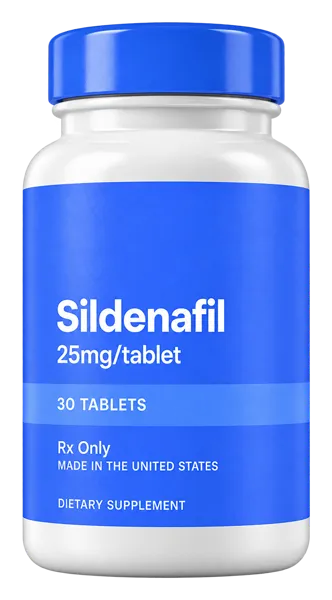
Status: Sildenafil: Active ingredient is FDA-approved; compounded versions are not FDA-approved. What these status terms mean.
Sources (7)
Advertising disclosure: links marked "Paid link" go to Bodybuilding Peptides (trybbpeptides.com), an affiliate destination, and The ED Report may earn a commission if you buy there. Our coverage is independent of that relationship, and nothing on this page is medical or legal advice.
 See it at Bodybuilding Peptides