Ginseng for ED: what the evidence shows
The short answer
The ginseng studied most for erectile dysfunction is Asian ginseng (Panax ginseng), mostly as Korean red ginseng. A 2021 Cochrane review of nine small, short placebo-controlled trials found its effect on erectile function was probably too small to matter clinically. No trial has compared it with prescription ED medicines, and it is not FDA-approved for ED.
Status: Dietary supplement: not FDA-approved to treat any disease. Source: NCCIH Asian Ginseng fact sheet, checked 2026-10-17.
Evidence: mixed or small trials.
In short: if you are asking which ginseng is best for erectile dysfunction, the honest answer is that only one kind has real trial data behind it, and even that data is thin. Nearly every ED trial tested Asian ginseng (Panax ginseng), usually prepared as Korean red ginseng. The most careful summary of those trials, a 2021 Cochrane review, found the measured improvement on erectile function questionnaires was trivial, below the size the reviewers counted as clinically important, although men taking ginseng were more likely to say they could have intercourse (Lee and colleagues, Cochrane Database of Systematic Reviews, 2021). This page explains which ginseng was studied, what the trials found, the side effects and interactions worth knowing, and where ginseng sits next to treatments that are approved.
Which ginseng was studied for ED?
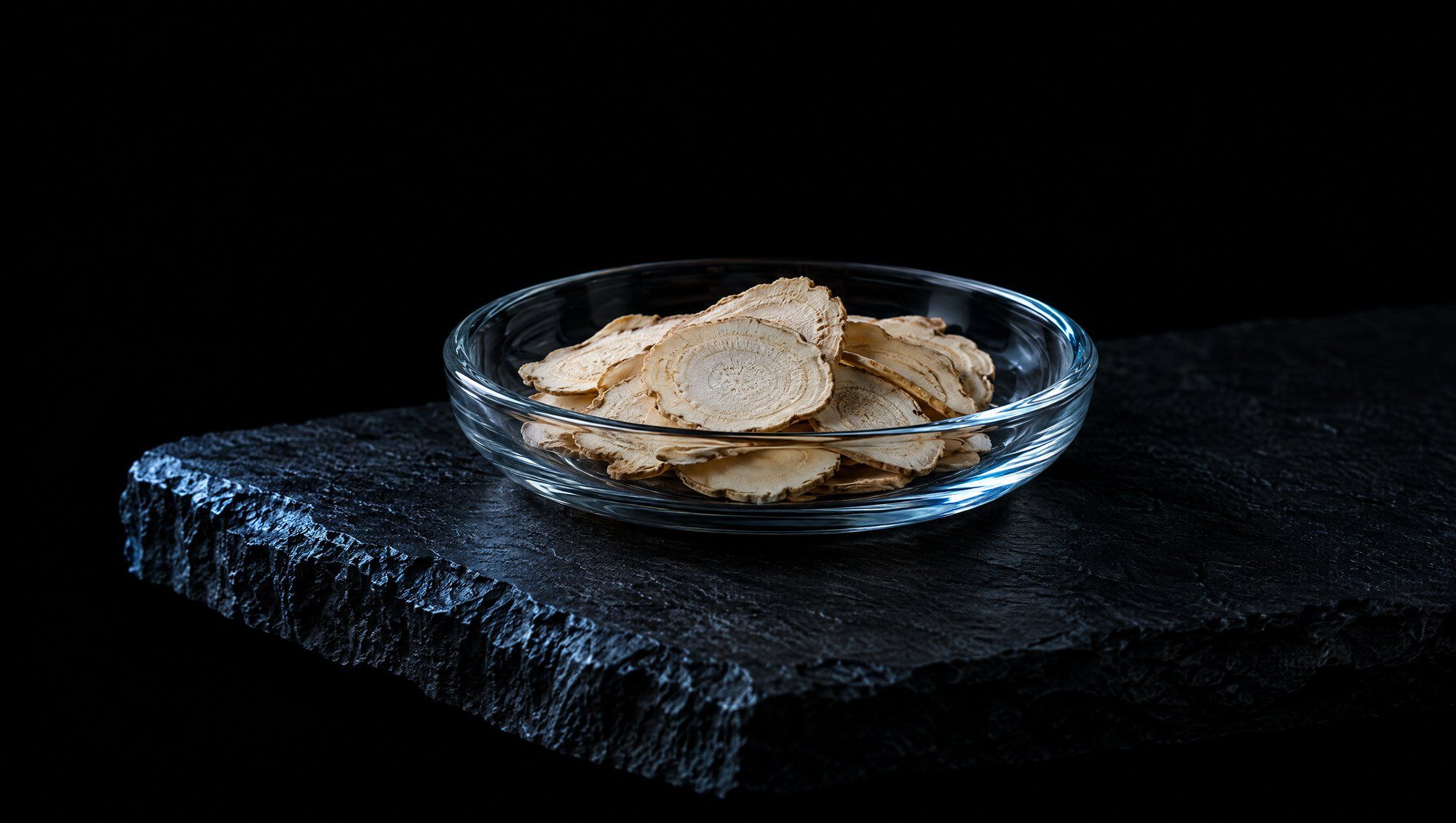
Asian ginseng, Panax ginseng, mostly in the form called Korean red ginseng. NCCIH explains that “red ginseng” and “white ginseng” are both Asian ginseng, prepared in two different ways (NCCIH, Asian Ginseng). In the nine trials the Cochrane review included, eight of the study titles name Korean red ginseng or red ginseng extract, and one tested an extract of tissue-cultured mountain ginseng, which is also Panax ginseng (Lee and colleagues, World Journal of Men’s Health, 2022). Most of the trials were run in South Korea.
American ginseng (Panax quinquefolius) is a different plant, and the Cochrane authors said it is unclear whether their findings apply to American or Chinese ginseng grown elsewhere (same source). So “best” here means “most studied”, not “proven to work”.
| Type | What it is | ED trial evidence |
|---|---|---|
| Korean red ginseng | Asian ginseng (Panax ginseng) root, prepared as “red” ginseng | Most of the placebo-controlled ED trials; small and short |
| Mountain ginseng extract | Tissue-cultured Panax ginseng | One small trial in the Cochrane review |
| White ginseng | Asian ginseng prepared a different way | No separate ED trial evidence in the Cochrane review |
| American ginseng | Panax quinquefolius, a different species | No trials in the Cochrane review; applicability unknown |
Source: Cochrane review summary, 2022 and NCCIH, Asian Ginseng.
What did the ginseng trials find?
On standard erectile function questionnaires, men taking ginseng scored a little better than men taking a placebo, but the difference fell below the size the reviewers judged to be clinically meaningful. The 2021 Cochrane review pooled nine trials with 587 men aged 20 to 70 who had mild to moderate ED, all compared with placebo and followed for no more than 12 weeks (Lee and colleagues, Cochrane, 2021). Ginseng “may improve men’s self-reported ability to have intercourse”, the authors wrote, but the certainty of that evidence was low.
| Outcome in the Cochrane review | What the reviewers concluded | Certainty of evidence |
|---|---|---|
| Erectile function (IIEF-15 erectile domain, 3 trials) | Trivial effect, below the clinically important threshold | Low |
| Erectile function (IIEF-5, 3 trials) | Probably a trivial effect | Moderate |
| Self-reported ability to have intercourse (6 trials) | May improve | Low |
| Satisfaction with intercourse (3 trials) | Trivial effect | Low |
| Side effects (7 trials) | Little to no difference from placebo | Low |
| Quality of life | Not measured by any trial | None |
| Ginseng compared with PDE5 inhibitors such as sildenafil | No trials found | None |
Source: Lee and colleagues, Cochrane, 2021; summary in World Journal of Men’s Health.
Why so much doubt? The reviewers downgraded the evidence because many trials did not report how men were randomized or how group assignment was concealed, problems known to inflate results (World Journal of Men’s Health summary). An earlier systematic review of seven red ginseng trials, with 363 men in total, reached a similar place: it called the evidence “suggestive”, rated the trials’ quality low on average, and said more rigorous studies were needed (Jang and colleagues, British Journal of Clinical Pharmacology, 2008).
Single trials can look more impressive than the pooled picture. A 2002 crossover trial of 45 men reported higher questionnaire scores on Korean red ginseng than on placebo (Hong and colleagues, Journal of Urology, 2002), but that study is one of the small trials the later reviews weighed, and the pooled result is the better guide. Our explainer on how to read ED evidence covers why one positive trial is not the same as proof.
What are the side effects and interactions of ginseng?
In the ED trials, side effects were not clearly more common on ginseng than on placebo, though the trials were short and the certainty was low (Lee and colleagues, Cochrane, 2021). NCCIH says short-term oral use of Asian ginseng, up to 6 months, appears safe for most people, that trouble sleeping is its most common side effect, and that uncommon reported side effects include severe rash, liver damage and severe allergic reactions (NCCIH, Asian Ginseng). Questions remain about long-term safety.
Interactions deserve attention, because NIDDK notes that heart and blood vessel disease, diabetes and high blood pressure can lead to ED (NIDDK, Treatment for ED), and some medicines for those conditions appear on NCCIH’s list of uncertain ginseng interactions.
| Concern | What the source says |
|---|---|
| Blood sugar | Asian ginseng might lower blood sugar; people with diabetes should talk to a clinician first (NCCIH) |
| Blood clotting and warfarin | Asian ginseng may interfere with clotting; studies of its effect on warfarin have had mixed results (NCCIH Herb-Drug Interactions). In a small trial in healthy volunteers, American ginseng reduced warfarin’s effect (Yuan and colleagues, Annals of Internal Medicine, 2004) |
| Blood pressure medicines, statins, some antidepressants | NCCIH says it is uncertain whether ginseng interacts with calcium channel blockers and other blood pressure medicines, statins and some antidepressants (NCCIH Herb-Drug Interactions) |
| Autoimmune conditions | Asian ginseng may worsen autoimmune disorders (NCCIH) |
Product quality is a separate risk. FDA says many products that claim to help with sexual enhancement or treat sexual dysfunction “are likely to be contaminated with dangerous hidden ingredients”, and that these products are sometimes falsely advertised as dietary supplements or all-natural treatments (FDA, Sexual Enhancement and Energy Product Notifications). Our page on FDA tainted supplement warnings explains what the agency’s lab tests found and why that matters for men on nitrate heart medicines.
Is ginseng approved to treat ED?
No. Ginseng is sold in the US as a dietary supplement, and NCCIH notes that, unlike drugs, dietary supplements are not approved by FDA before they are sold, and the rules for making them are less strict than for drugs (NCCIH, Asian Ginseng). The prescription pills for ED are the PDE5 inhibitors, which NIDDK describes as oral medicines that improve blood flow to the penis (NIDDK, Treatment for ED). The Cochrane review found no trial comparing ginseng with any of them, so there is no trial evidence that ginseng works as well (Lee and colleagues, Cochrane, 2021). For how approved treatments work, see how ED medications work and our overview of ED treatment options.
How does ginseng compare with other natural approaches?
Among non-drug approaches, NIDDK lists quitting smoking, limiting alcohol, more physical activity, a healthy weight and a healthy eating plan as changes a clinician may suggest for ED (NIDDK, Treatment for ED). Ginseng sits in the supplement group, where its trials are small and the measured effects on validated questionnaires were trivial. Our guide to natural remedies for ED vs medication weighs these options side by side, and lifestyle and ED covers the habits in more depth.
When to talk to a clinician
Talk to a clinician before starting ginseng if you take any regular medicine, especially for diabetes, blood pressure, blood clotting, cholesterol or depression. NIDDK advises talking with a health care professional before using dietary supplements or other alternative medicines for ED, for safety reasons (NIDDK, Treatment for ED). ED itself is worth a visit too, because NIDDK notes that conditions such as heart and blood vessel disease, diabetes and high blood pressure can lead to ED. Our guide on when to see a doctor about ED explains what that appointment covers. Tell whoever treats you about any supplement you take, including the product name.
Sources
- Lee HW, Lee MS, Kim TH, et al. Ginseng for erectile dysfunction. Cochrane Database of Systematic Reviews, 2021, CD012654. Nine placebo-controlled trials, 587 men, trivial effects on validated scores, low to moderate certainty, no comparison with PDE5 inhibitors: cochranelibrary.com, Cochrane review
- Lee HW, et al. Ginseng for Erectile Dysfunction: A Cochrane Systematic Review. World Journal of Men’s Health, 2022. Summary of findings table, included trials, applicability to American and Chinese ginseng, reasons for downgrading: pmc.ncbi.nlm.nih.gov, PMC8987140
- National Center for Complementary and Integrative Health, Asian Ginseng (last updated February 2025). Red and white ginseng, ED research, safety, side effects, blood sugar, supplement regulation: nccih.nih.gov, Asian ginseng
- NCCIH, Herb-Drug Interactions: What the Science Says (December 2024). Warfarin, blood pressure medicines, statins, antidepressants: nccih.nih.gov, herb-drug interactions
- Jang DJ, Lee MS, Shin BC, Lee YC, Ernst E. Red ginseng for treating erectile dysfunction: a systematic review. British Journal of Clinical Pharmacology, 2008. Seven trials, 363 men, “suggestive” evidence, low quality: pmc.ncbi.nlm.nih.gov, PMC2561113
- Hong B, et al. A double-blind crossover study evaluating the efficacy of Korean red ginseng in patients with erectile dysfunction: a preliminary report. Journal of Urology, 2002. 45 men: pubmed.ncbi.nlm.nih.gov, 12394711
- Yuan CS, et al. American ginseng reduces warfarin’s effect in healthy patients: a randomized, controlled trial. Annals of Internal Medicine, 2004. 20 healthy volunteers: pubmed.ncbi.nlm.nih.gov, 15238367
- National Institute of Diabetes and Digestive and Kidney Diseases, Treatment for Erectile Dysfunction (last reviewed October 2024). Lifestyle changes, PDE5 inhibitors, conditions that can lead to ED, talk to a professional before supplements: niddk.nih.gov, ED treatment
- U.S. Food and Drug Administration, Sexual Enhancement and Energy Product Notifications. Products claiming sexual enhancement likely contaminated with hidden ingredients; sometimes falsely sold as supplements or all-natural: fda.gov, sexual enhancement product notifications
Advertising disclosure: links marked "Paid link" go to Bodybuilding Peptides (trybbpeptides.com), an affiliate destination, and The ED Report may earn a commission if you buy there. Our coverage is independent of that relationship, and nothing on this page is medical or legal advice.